


Program: Writer’s Workshops
Create and Grow in Our Writing Community
A warm and creative community, Writer’s Workshop is a welcoming space for beginners and advanced young writers alike. In both our On-Campus Writer’s Workshop and our Online Writer’s Workshop, students work with accomplished writers to hone their craft and explore their creativity. Students come away with new ideas, a brimming portfolio, and a refined sense of their own voice.
Writer’s Workshop is a perfect balance of instruction from faculty, structured time to work on their craft with peers, and camp fun. A typical day begins with a seminar taught by our expert faculty. These seminars aim both to awaken your student’s natural creative impulses as well as grow writing skills with a focus on key concepts like voice, point of view, style, world-building, and more. Students use fun creative prompts to practice new techniques.
In addition to instruction from professional writers, our Program Assistants serve as mentors, assisting students that may be stuck or need additional inspiration. Great Books Program Assistants are college and graduate students who are dedicated to fostering a dynamic and supportive community of young authors.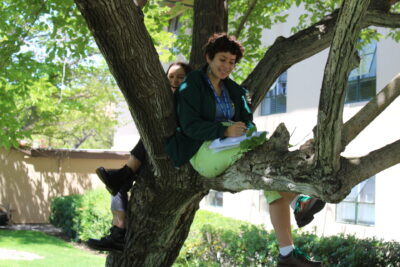
Of course, summer camp wouldn’t be complete without fun too! There are many opportunities to unwind and socialize with peers each day, including games, guest speakers, and free time to connect with new friends. Every week closes with a Writer’s Coffeehouse on Friday to celebrate creativity. The camp community gathers together to share selections from the work they have created over the week.
Space is very limited.
For Students Entering Grades:
On the Campuses of:
- Amherst College
- Stanford University
- Online (USA)
- Online (Asia)
Ready To Enroll?
Let's Get Started!Intermediate Program – Rising 6-8 graders
Students in the Middle School Program have the opportunity to try their hand at various genres while learning and practicing key writing techniques. Students explore writing poetry, short stories, creative essays, and more. 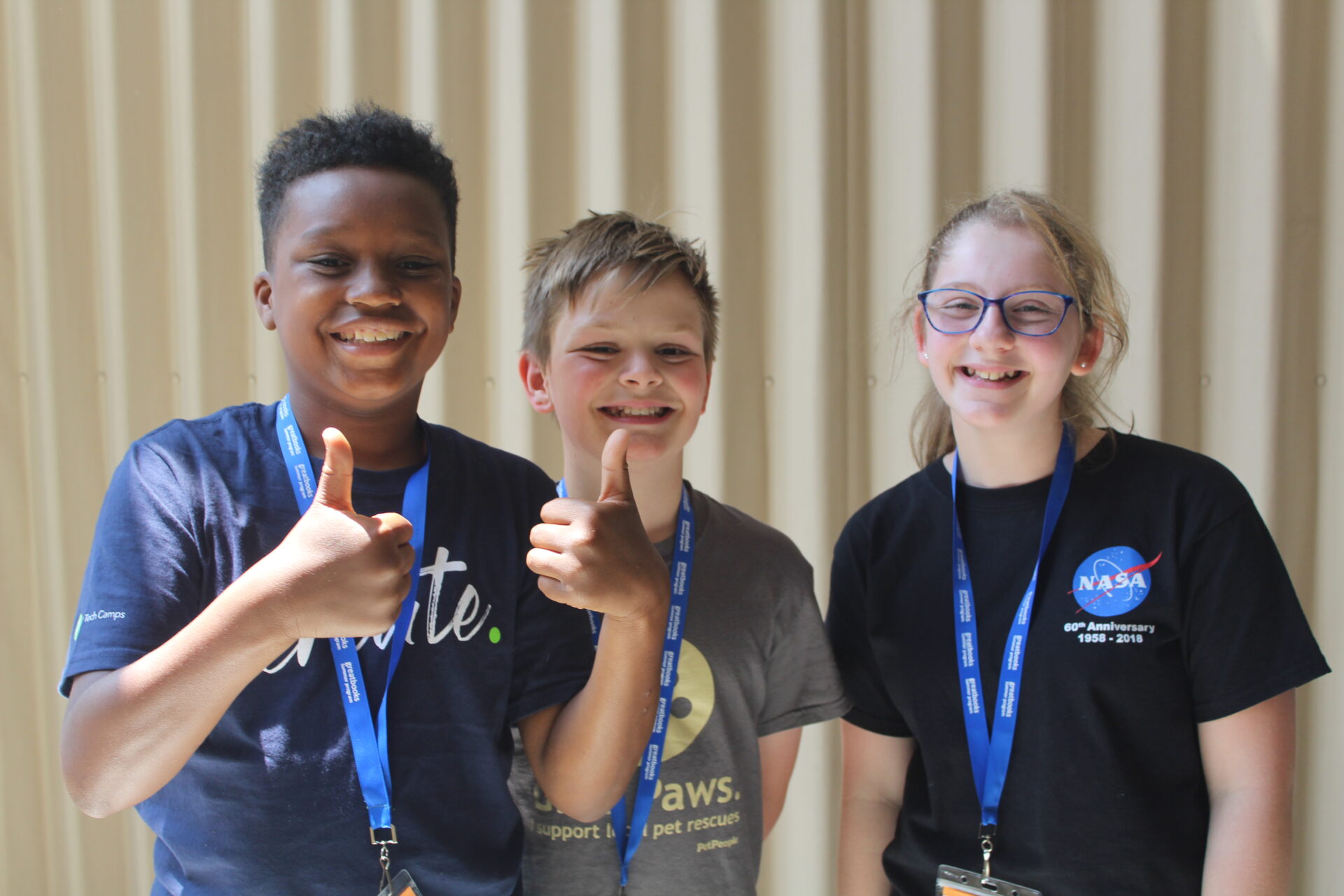 They learn tips to overcome writer's block, to artfully show the passage of time in writing, and to play with language to make writing more powerful.
Most importantly, as students cultivate their voice as writers, they learn to move beyond proofreading to truly understand editing and refinement as an important part of the writing process. Sharing work in workshops opens students to new views and new ideas and helps students embrace the creative possibilities within each piece of their work.
While the focus is generally on creative writing, the writing skills learned carry forward into the classroom too.
Senior Program – Rising 9-12 graders
The High School Program turns the intensity and focus up a notch and is excellent preparation for writing college essays and cultivating advanced skills. Afternoon workshops take on greater importance for this group. Students will choose a focus - fiction, poetry, screenwriting, non-fiction/narrative essays, journalism, writing for gaming, or effective writing.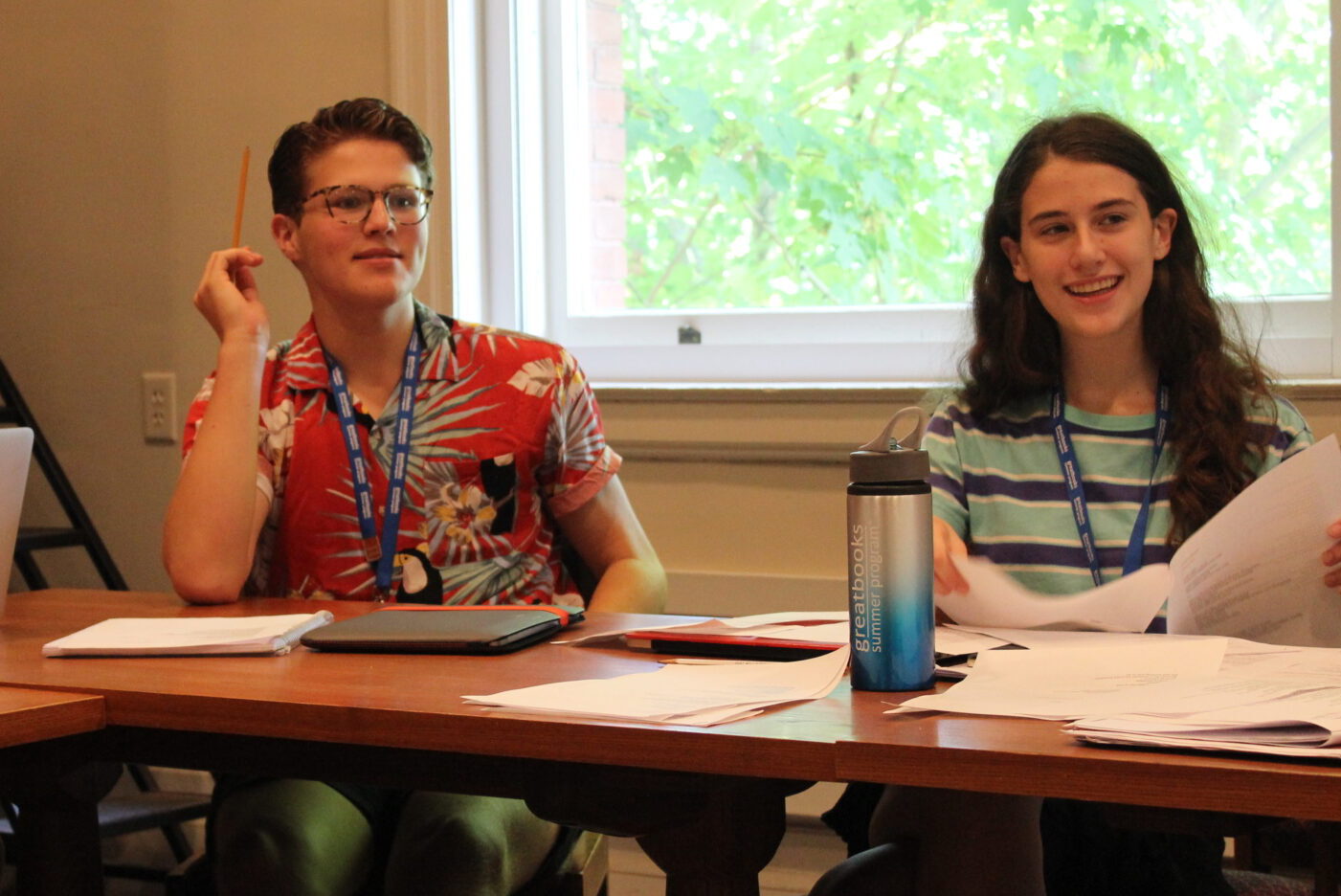
These genre-specific tracks allow students to build nuanced skills in their area of greatest interest. Led by faculty who are experts in their field of writing, these workshops create a supportive and welcoming environment that encourages students to think of their writing from alternate perspectives and to tune the fine details of their pieces. In all tracks, workshopping with peers is emphasized, aiming to assist students in learning how to give and receive critical feedback. Learn more about the writing tracks below.



Benefits
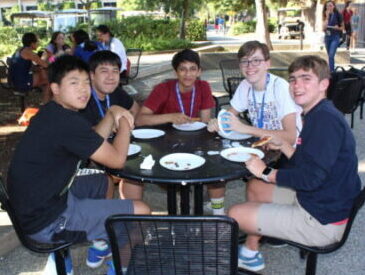
The benefits of a Great Books Writer’s Workshop program are many and wide-ranging for both beginners and advanced writers:
- Create an expanded portfolio of work.
- Develop a stronger sense of your voice as a writer.
- Build the skills to express yourself clearly in academic writing.
- Learn critiquing and workshopping skills for college and beyond.
- Connect with a network of supportive and wildly creative peers.
Writing Tracks
Exploratory (Middle School- Amherst Week of July 19/Stanford/Online)
The Exploratory track for our younger students emphasizes short stories while also exploring additional forms. Students are encouraged to experiment with writing in multiple genres and with varying types of narration. The focus is on energizing exercises to bolster creativity as students master important skills such as vivid description and more. In past summers, students have worked on scripts, short stories, novellas, essays, poetry, and other creative forms.
Fiction (High School – Amherst Week of July 19/Stanford/Online)
The Fiction track focuses on key elements of prose fiction including (but certainly not limited to) point of view, the play and pause of time, character and world building, dialogue, and more. Students are encouraged to experiment with short stories and longer form fiction writing. This is a great workshop for both those already working on a novel and those newer to creative writing and looking to find their voice as a writer.
Non-Fiction/Personal Essays (High School – Amherst Week of July 19/Stanford/Online)
The Non-Fiction/Personal Essays track explores the art of personal essays. Through reading expository, argumentative, and narrative essay forms, students will engage in the vast creative potential of essay writing. Students learn structure, expression, vivid descriptions, and more. This track is especially beneficial for students wishing to cultivate the skills necessary to write a powerful college admissions essay.
New - Effective Writing (High School - Stanford only)
From well-formed correspondence to classroom papers, this new track focuses on important writing skills applicable to school and life. This is writing for impact. Starting with topic sentences. Sharing persuasive supporting evidence. Crafting a powerful closing argument. Students learn the building blocks to jumpstart writing. This track is most useful for students seeking to become stronger academic writers in preparation for the rigor of advanced high school classes.
Poetry (High School - Amherst Week of July 19)
The Poetry track will focus on writing that explores poetic language, including but not limited to cadence, rhythm, visual texture, and meaning. Exploratory readings and inspiring writing exercises will push students to develop their voice as poets and grow their skills in new directions.
Screenwriting (High School - Stanford only)
The screenwriting track explores the fascinating world of writing screenplays. Students will delve into the creative process of writing scripts as well as the technical elements of script formatting. Students will dig into the nuances of character-building, story development, voice, and dialogue for the screen as they simultaneously explore screenplay form. And, of course, we'll put these skills into practice creating original screenplays.
Journalism (High School - Amherst Week of July 12)
The Journalism track introduces students to the dynamic world of writing across multiple media platforms—including print, digital, and broadcast. Students will explore the fundamentals of journalistic storytelling through research, interviewing, and reporting, while also examining ethics and integrity in journalism. Through hands-on practice, they’ll learn to craft compelling news articles, features, and multimedia stories. For a final project, students may write a feature or produce their own podcast or video segment.
Writing for Video Games (High School - Amherst Week of July 12)
Writing for Video Games explores the fundamentals of narrative, dialogue, and world-building specific to the genre. Students learn the critical differences between linear storytelling formats (like novels and films) and the unique, interactive, and often non-linear narratives required for game design. Through targeted prompts students develop the skills to create compelling characters, construct detailed game worlds, and write dynamic dialogue that evolves with player choices.
On The Campuses Of:
Amherst College
For Students Entering Grades:
9-12 (High School), 6-8 (Middle School)One & multi-week programs available:
- July 12, 2026
- July 19, 2026
Stanford University
For Students Entering Grades:
9-12 (High School), 6-8 (Middle School)One & multi-week programs available:
- June 28, 2026
Online (USA)
For Students Entering Grades:
9-12 (High School), 6-8 (Middle School)One & multi-week programs available:
- July 5, 2026
Online (Asia)
For Students Entering Grades:
9-12 (High School), 6-8 (Middle School)One & multi-week programs available:
- July 26, 2026
